Who pays for a farm boundary fence in NSW
Under the Dividing Fences Act 1991 (NSW), in the version we found dated 7 December 2024, adjoining owners usually share the cost of a sufficient dividing fence equally. An owner who wants a higher standard pays the excess. The share is sought by a written notice, and if the owners do not agree within one month, either may apply to a court or tribunal. That is the short answer. The rest of this page explains each part and says where the sources stop.
Check the current Act on legislation.nsw.gov.au before you act on anything here. We are a referral service, not lawyers, and this page describes the process in plain words. It is not legal advice.
What counts as a dividing fence, and what is sufficient
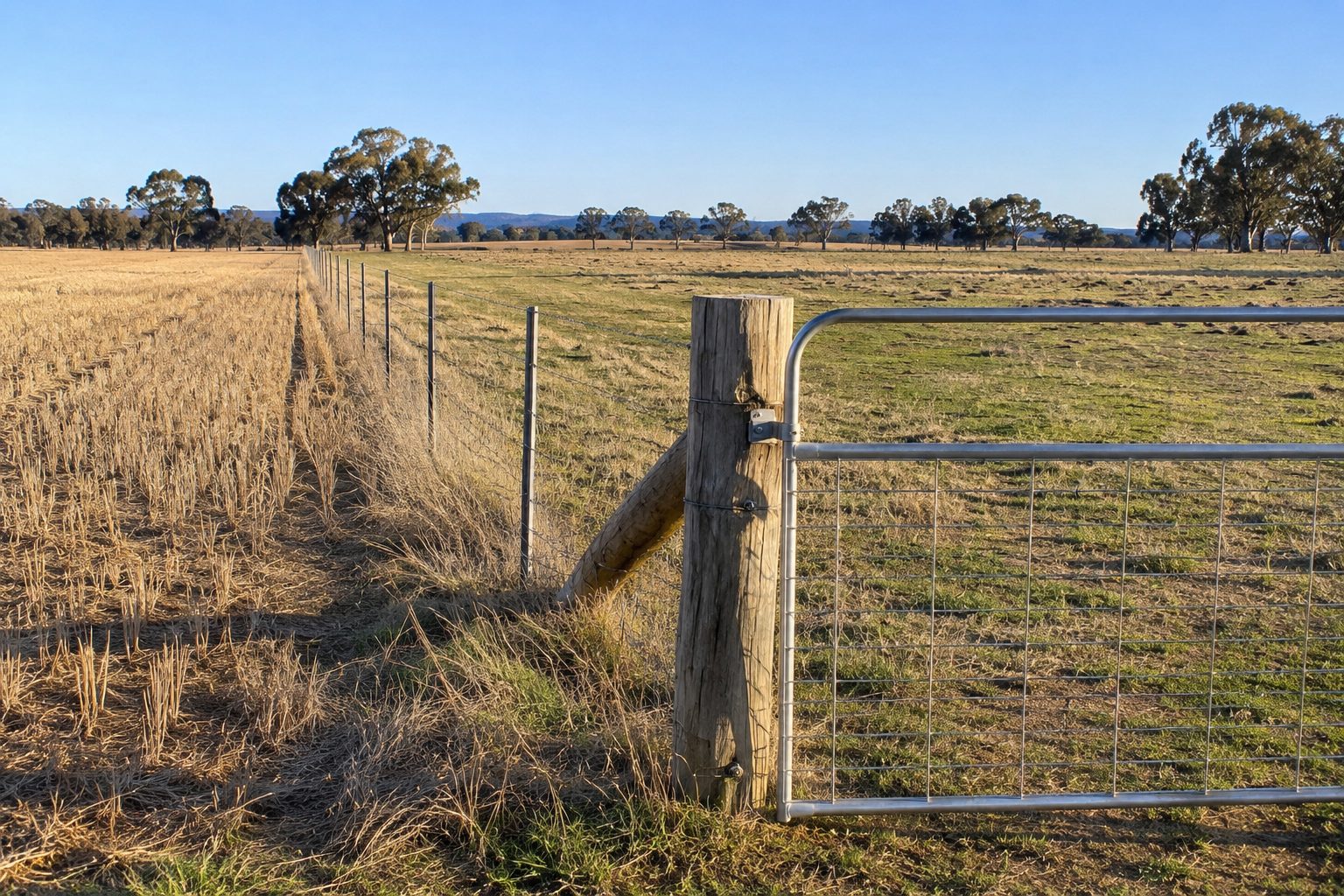
The Act describes a dividing fence as a fence separating the land of adjoining owners. It is about sharing the cost of that fence, which is why it matters most when two owners disagree about who pays. The word "sufficient" is not defined in the Act. A court or tribunal looks at all the circumstances of the case, and the Act lists some of them: the existing fence, the use the land is put to, privacy, the types of fence common in the area and council policies.
It also pays to agree the standard before the price. If one owner runs sheep and the other runs cattle or horses, they may want different fences, and the owner who wants more pays the excess. Settling that early avoids a dispute about what the quote should include.
For a farm, that means the answer depends on what is already there and what the land is used for. The sources give no standard height or wire type, and we do not make one up. The sheep and cattle fencing page covers stock fence types.
Equal shares, higher standards and damage
The Act's starting point is an equal split, with some exceptions. The table sets them out in plain words, as the Act and the Legal Aid NSW fences FAQs describe them (the Act in the version we found and Legal Aid NSW).
| Situation | What the sources say | What to do |
|---|---|---|
| An ordinary shared fence | Owners usually share the cost equally. | Agree the split in writing, and agree the work before it starts |
| One owner wants a higher standard | That owner pays the excess over a sufficient fence. | Say so plainly in the notice and ask the contractor to price both |
| Damage caused by negligence or on purpose | The person responsible can be liable for up to the whole cost. | Keep dated photos and get advice |
| Urgent work on a damaged or destroyed fence | The cost of urgent work can be shared. Legal Aid NSW says urgent repairs may go ahead without notice, but work later found not to be urgent can cost the contribution. | Photograph the damage first and keep receipts |
| Work done before agreement | The Act says there is no liability for work done before agreement is reached. | Do not start until the owners have agreed |
The notice and the one month wait
A contribution is sought by serving a written notice. The notice sets out the boundary line, the work and the estimated cost. If the owners do not agree within one month after a notice is served, either owner may apply to a court or tribunal. The sources we read do not agree on which one, and one court fact sheet looks older than the others, so check which applies before you apply. We name none here.
The Act asks for an estimated cost in the notice, so a written quote from a contractor is a sensible way to get one. How detailed the estimate must be is not something the sources we read say, and a notice that is too thin may cause argument later. Ask a solicitor or Legal Aid NSW what to attach.
Two points are easy to miss. The Act, in the version we found, does not say that a neighbour who stays silent is taken to agree. And the Act applies only when a contribution is sought. If one owner pays for a fence and never asks, it is not engaged.
- Talk first. Most fence matters are settled by a conversation and a sketch.
- Agree in writing. A short note on the line, the work and the split is better than memory.
- Serve a written notice if you cannot agree, with the line, the work and the estimated cost.
- Wait the month. Do not start the work in that time.
- Try mediation. The sources we read say a Community Justice Centre offers it free.
- Keep photos of the old fence, the new fence and anything damaged.
A State Library NSW guide (secondary) and another council's fact sheet (secondary, for illustration only) describe the same practical steps in similar terms (State Library guide and another council's fact sheet).
Later owners, and what the sources do not settle
Agreements and orders under the Act do not bind later owners, so a deal with a neighbour does not follow the land if either of you sells. If the fence matters, say so in the sale paperwork.
Several points remain open, and we say so rather than guess. We read the Act in its PDF version dated 7 December 2024 and cannot confirm that it is the latest. We found no rural-specific and no fire-specific provision in it. How the Act treats flood damage was not checked. Whether a public authority that manages Crown land, a reserve or a road is bound by the Act is not something we confirm. Ask a solicitor, and for a boundary beside public land see fences beside roads, stock routes and Crown land. For damaged fences, see flood and fire damaged fence repair.
Putting it together with a contractor
The contractor's price and your neighbour's share are two separate things. Ask the contractor for a written quote that you can attach to a notice, and settle the split with your neighbour in writing. The farm boundary fencing page covers the job side, and you can send your fence details when you are ready.
What this guide cannot do
This guide cannot tell you what your neighbour owes, whether your fence is sufficient or which body will hear a dispute. It describes the process as the sources we read describe it, and the sources differ on some points. We are not lawyers and this is not legal advice.
This site passes enquiries to local contractors. The contractor sets their own terms, and nothing here is a quote, a build or a contract. For your own fence, ask a solicitor, Legal Aid NSW or a Community Justice Centre, and read the current Act on legislation.nsw.gov.au.
Check the current rules before you rely on this
This page describes how the Dividing Fences Act 1991 (NSW) shares the cost of a dividing fence, in the version we found, and the practical steps before and after a notice. It describes the rules in general terms as they stood in November 2026. Standards, forms, thresholds and fines change.
The authoritative sources are Dividing Fences Act 1991 (NSW), in-force version dated 7 December 2024 (check the current version), Legal Aid NSW, fences, boundaries and retaining walls FAQs, State Library NSW, dividing fences guide (secondary source) and Blayney Shire Council, dividing fences fact sheet (another council; secondary, illustration only). Where anything here differs from those sources, they are right and we are not.
We are not fencing contractors, builders, regulators or lawyers. For what applies to your fence, ask Legal Aid NSW, a Community Justice Centre or a solicitor, and ask the contractor to put the work in a written quote.
Accurate at the time of writing, November 2026. Always check the source before relying on it.