Do you need council approval for a farm fence in NSW?
It depends on the fence and the land. The NSW planning page we read says fences can be built without planning approval in many circumstances, and it sets out limits for fences in rural zones. It does not name farm fences, so the safe step is to confirm with the council that covers your land. This page explains the exempt rules, the separate rules for clearing vegetation and the point about electric fence standards. It gives no yes or no for a particular fence.
Three questions are easy to mix up, and they are separate. Planning approval is about whether the fence can be built. Clearing is about removing native vegetation to build it. Licensing is about the contractor. This page covers the first two.
Planning: when a rural fence can be exempt development
The NSW Planning page on fences says they can be constructed without planning approval in many circumstances. For rural zones, environmental protection zones and R5 villages, it sets conditions for an exempt fence (NSW Planning fences page).
| Point | What the planning page says |
|---|---|
| Height | An exempt fence must not exceed 1.8 m. |
| Fence system | It must use a post and wire or a post and rail system. |
| Masonry | Masonry is allowed only within 3 m of a driveway entrance. |
| Slopes | Stepped fences on slopes can reach 2.2 m per step. |
| Exclusions | A fence is not exempt on a heritage item, in a conservation area or on critical habitat. |
| Otherwise | A development application goes to the council. |
Farm fences are not named on the page, so we do not say whether yours is exempt. A fence that is taller than the limit, is made differently, or sits on an excluded site may not be. Ask the council. The horse and lifestyle block page covers post and rail fences on smaller blocks.
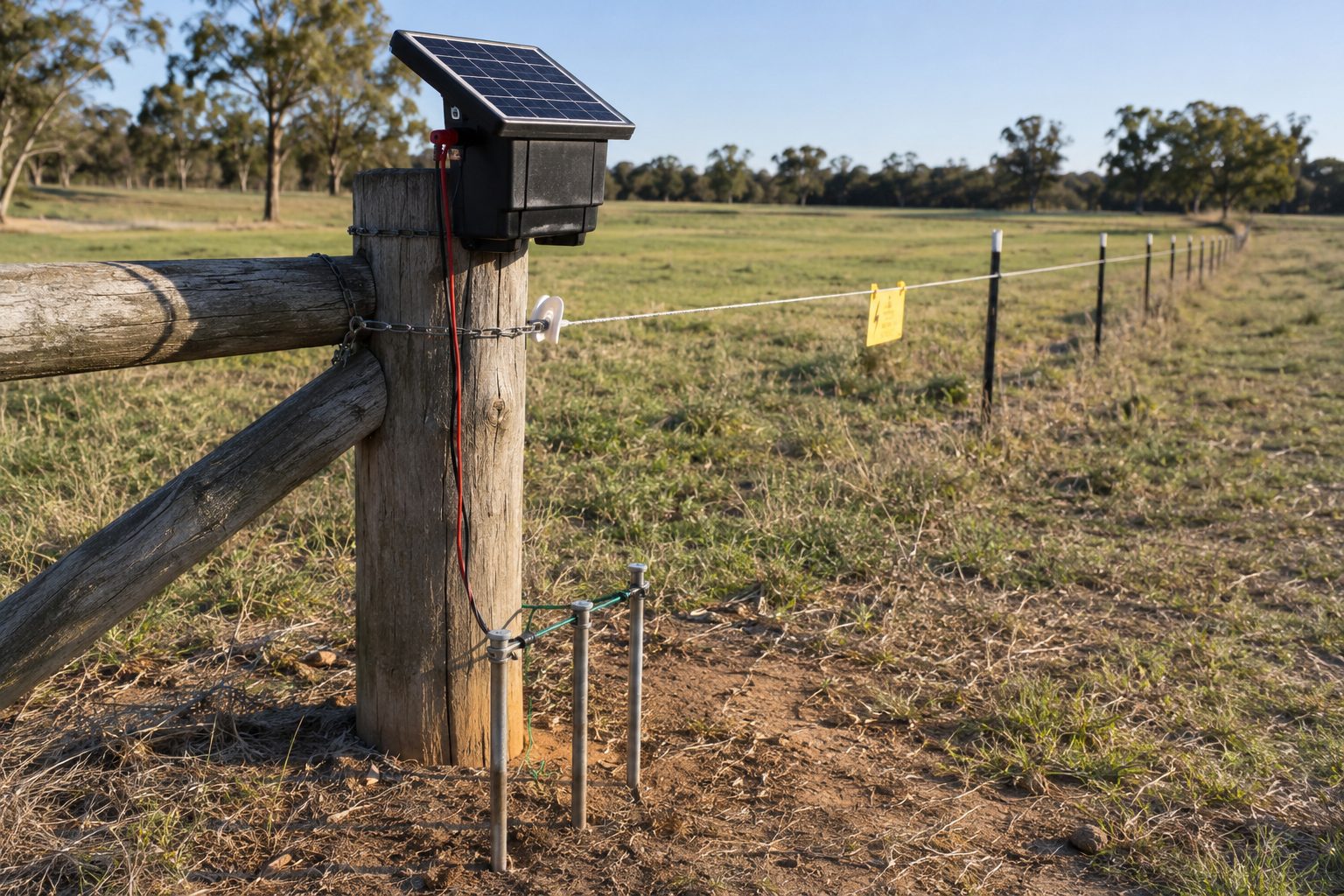
Clearing vegetation for a fence line
Clearing native vegetation is a separate rule from planning. The NSW Government page on allowable activities lists rural infrastructure, which includes fences, as an activity that can involve clearing, within limits (native vegetation allowable activities page). It sets maximum clearing widths that depend on the zone the land is in.
| Land category on the page | Maximum clearing width it lists |
|---|---|
| Western zone | 40 m |
| Central zone | 30 m |
| Coastal zone | 15 m |
| Small holdings | 12 m |
| Vulnerable and sensitive land | 6 m |
The page lists further cases, and it sets conditions. The clearing must be for genuine agricultural use, and it must be the minimum amount of vegetation necessary. The distances apply even if an adjoining landholder carried out part of the clearing. Which zone each town or property falls in is shown on a map that the page presents as an image, and we could not read it. So we give no distance for any town and do not say which zone a town is in. Check the map and ask Local Land Services which category your land is in.
Electric fences and the energiser standard
The planning page says an electric fence must comply with a standard to be exempt development. Electric fence energisers are covered by Australian and New Zealand standards, and which standard applies to an installation is a question for the contractor. We do not say which standard is current in NSW, because we could not confirm it. A New Zealand authority page describes a standard for energisers, and it is a secondary source that cannot settle the NSW position (New Zealand authority page).
So ask the contractor which standard their installation meets, and ask for it in writing. The electric fencing page covers energisers, earthing and flood-country wiring.
Licensing is a third, separate question
Licensing rules differ by job. The NSW Government fencing page we found speaks about fencing on residential property boundary lines, and we could not confirm that it covers rural or farm fencing. So do not treat an answer on planning or clearing as an answer on licensing. Ask the contractor which licence or registration they hold for your job, and ask NSW Fair Trading or Building Commission NSW if you are unsure. The contractor checklist has the questions.
Putting the questions in order
Ask the council about planning before you ask for quotes, because a design that is not exempt changes the job. Ask Local Land Services about clearing before the contractor visits, so the line is chosen with the limits in mind. Then tell each contractor what you have been told and ask who applies for any approval and who pays the fee. Keep the answers in writing, with the date and the name of the person who gave them.
What to ask the council and Local Land Services
- Is a fence of this height and type exempt development in my zone?
- Is the site a heritage item, in a conservation area or critical habitat?
- Is any clearing needed, and what category is my land in?
- Who confirms the zone and the clearing width for my property?
- For an electric fence, which standard does the installation need to meet?
For a fence on a shared boundary, the farm boundary fencing page covers the neighbour side, and you can send your fence details when you are ready.
What this guide cannot do
This guide cannot tell you whether your fence needs approval, whether you may clear a particular tree, or which clearing distance applies to your land. The planning and clearing pages we read do not name farm fences, and the clearing map was an image that we could not read.
As a referral service, we pass your enquiry to a local contractor, who sets their own terms; we do not quote, build or sign contracts. For your own fence, ask the council and Local Land Services, and check the pages above for the current rules.
Check the current rules before you rely on this
This page describes how NSW planning rules treat rural fences, how clearing for a fence line is treated and the electric fence standard point. It describes the rules in general terms as they stood in November 2026. Standards, forms, thresholds and fines change.
The authoritative sources are NSW Planning, fences (exempt and complying development), NSW Government, native vegetation allowable activities (rural infrastructure, fences) and New Zealand building authority, AS/NZS 60335.2.76:2019 electric fence energisers (secondary; New Zealand; status in NSW not confirmed). Where anything here differs from those sources, they are right and we are not.
We are not fencing contractors, builders, regulators or lawyers. For what applies to your fence, ask the council that covers the land and Local Land Services, and ask the contractor which licence or registration they hold for your job, then NSW Fair Trading or Building Commission NSW if you are unsure.
Accurate at the time of writing, November 2026. Always check the source before relying on it.