Electric fencing for farms in the Riverina
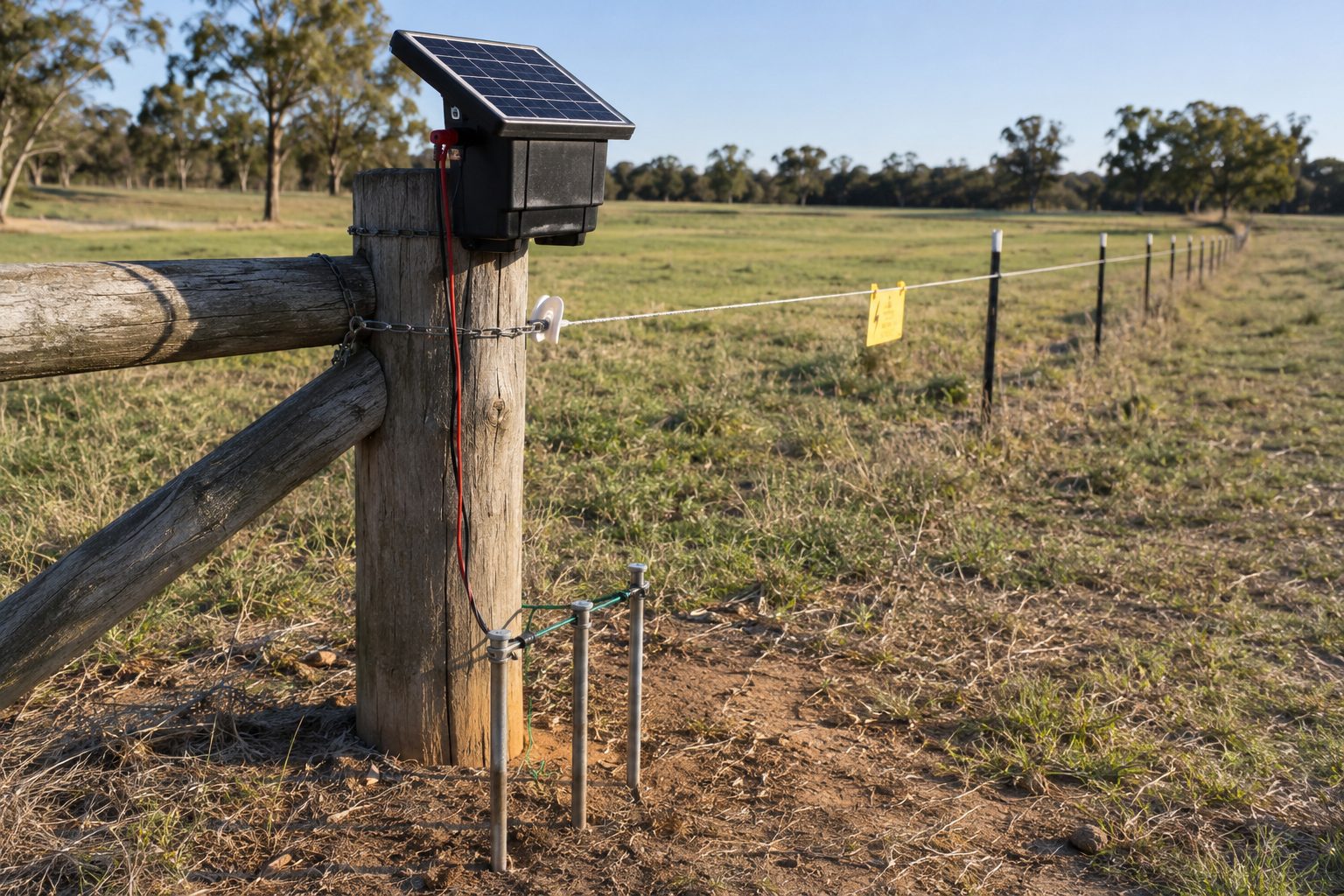
An electric fence for a farm is a system, not just a wire. It usually has an energiser, a source of power, one or more conductors, insulators, earth stakes and a way of crossing gateways. The sources we read do not detail those parts, so ask the contractor for a parts list and a plain explanation of how the system is earthed and powered. This is a referral site: your enquiry is passed to a local contractor, who does the work and is responsible for holding any licence or registration that applies.
This page is the buying page. Approvals and standards are on the approvals guide, and horse paddocks are on the horse and lifestyle page.
Energisers and standards
Electric fence energisers are covered by Australian and New Zealand standards. Ask your contractor which standard their installation meets. NSW Planning says an electric fence must comply with a standard to count as exempt development, and a New Zealand building authority page, a secondary source shows that standards for energisers exist. We could not confirm which edition applies in New South Wales, so this site names none.
Electric fencing in flood country
Victorian Government guidance for riparian fences in flood-prone areas, an interstate source, says electric fences are often the best choice in flood-prone areas, because fewer wires catch less debris (the Victorian guidance). The same guidance says they need reliable power and regular checks for shorts, and that an electrified floodgate should have a cut-out switch. It is guidance for creek and river frontages in another state, so treat it as one source of ideas and ask the contractor what suits your creek or channel.
Questions to put to the contractor
No source we found sets out running parts or maintenance for farm electric fences. These are the questions we would ask, as an editorial checklist rather than a sourced list.
| Topic | What to ask |
|---|---|
| Power | Mains or battery, and whether solar power suits the site. |
| Running parts | Which parts wear, such as batteries, wire and poles, and who replaces them. |
| Earthing | How the earth system is set up for your ground, and how it is tested. |
| Checks | How to find a short, and how often the fence should be checked. |
| Gateways | How a gateway is crossed, and whether a cut-out switch is fitted. |
| Flood exposure | What happens to the system when the line is under water. |
The word solar is used here as a question only. No source we read supports a claim about solar energisers, so ask whether it suits your site and what it costs to run. The cost factors guide covers how running parts show up in a quote.
When you enquire, send the length you want fenced, what the fence must hold or keep in, whether it is a laneway, a subdivision or a boundary, how far it is from the nearest power, and a photo of the line. That is usually enough for a contractor to come back with sensible questions before a visit.
Powerlines and machinery
Working near overhead lines is a safety issue on any fencing job. The regional electricity network operator's agriculture safety guide (the network operator's safety guide) says to stay at least 8 m from a powerline and anything touching it, lists machinery clearance distances that rise with line voltage, and treats machinery over 4.6 m high as higher risk. Ask your contractor who arranges powerline and underground service checks before work starts.
SafeWork NSW says to check that post hole diggers and power take-off shafts are guarded and to keep loose clothing away from rotating parts.
Does an electric fence need approval?
Many fences can be built without planning approval, and an electric fence has to meet the standard condition noted above to count as exempt. Whether your particular fence is exempt is for the council to say. Clearing a line of vegetation and licensing are separate questions, which the approvals guide keeps apart.
Internal fences, laneways and boundaries
An electric fence inside your own land, such as a laneway or a paddock subdivision, does not involve a neighbour. On a boundary it does. The Act in the version we found uses the idea of a sufficient dividing fence, and the sources we read do not say whether an electric fence counts as one. Raise that with the neighbour and a solicitor before you spend money, and agree in writing. The boundary fencing page sets out the order of events.
A creek or channel frontage raises one more question: what happens after the water comes up. For repairs, see the flood and fire repair page. Tell the contractor about any past flooding when you enquire, and send a photo of the frontage together with the length you want fenced.
What this page cannot do
It cannot design an electric fence or say which energiser, wire or earth system suits your land. It cannot say which standard an installation meets or which edition is current in New South Wales, and it makes no claim about fire safety. It cannot tell you which licence or registration a contractor holds, or whether one applies to electric fence work, because the pages we found do not say. The flood advice is from interstate guidance. Ask the contractor, the council that covers the land and NSW Fair Trading or Building Commission NSW.
Check the current rules before you rely on this
This page describes electric fence systems for farms, what interstate guidance says about flood country and where powerline and machinery safety fit. It describes the rules in general terms as they stood in November 2026. Standards, forms, thresholds and fines change.
The authoritative sources are NSW Planning, fences (exempt and complying development), Victorian Government, guidelines for riparian fencing in flood-prone areas (2015; Victorian guidance, interstate), Electricity network operator, electricity and agriculture safety guide (PDF), SafeWork NSW, machinery on farms and New Zealand building authority, AS/NZS 60335.2.76:2019 electric fence energisers (secondary; New Zealand; status in NSW not confirmed). Where anything here differs from those sources, they are right and we are not.
We are not fencing contractors, builders, regulators or lawyers. For what applies to your fence, ask the contractor which licence or registration they hold for your job, then ask NSW Fair Trading or Building Commission NSW if you are unsure, and ask the council that covers the land.
Accurate at the time of writing, November 2026. Always check the source before relying on it.