Farm boundary fencing in NSW: the job and the neighbour
Farm boundary fencing in New South Wales is two jobs in one: the fence, and the agreement with the person on the other side. The usual order is to talk to the neighbour, agree in writing, serve a written notice if you cannot agree, wait one month, and only then think about a court or tribunal. The contractor does the fence. This site is a referral service, so your enquiry is passed to a local contractor, who is responsible for holding any licence or registration that applies.
This page helps you get ready for that job. The full explainer on who pays is on the dividing fences guide.
The Act in short
The Dividing Fences Act 1991, in the version we found dated 7 December 2024, says a dividing fence is one that separates the land of adjoining owners. Owners usually share the cost equally, and an owner who wants a higher standard pays the excess. Contribution is sought by a written notice that states the boundary line, the work and the estimated cost. There is no liability for work done before agreement is reached. If the owners do not agree within one month, either may apply to a court or tribunal. Sources disagree on which forum, so check. Agreements and orders do not bind later owners. Check the current Act on legislation.nsw.gov.au.
What to settle with the neighbour first
Legal Aid NSW advises talking first and agreeing in writing, and notes that free mediation is available through a Community Justice Centre. Before you serve anything, settle these points:
- Who the neighbour is. Another farm, a lifestyle block, a road, a travelling stock reserve or Crown land. The last three raise separate questions, covered below.
- Where the line is. Ask the contractor and a surveyor who will locate it. We found no source on who arranges a fence line survey.
- What is there now. Photograph the existing fence, its gates and the ground on both sides.
- What standard you want. An owner who wants more than the neighbour agrees to pays the excess, so decide early.
- Whether to start. Do not start boundary work before agreement. Work done earlier may not be shared.
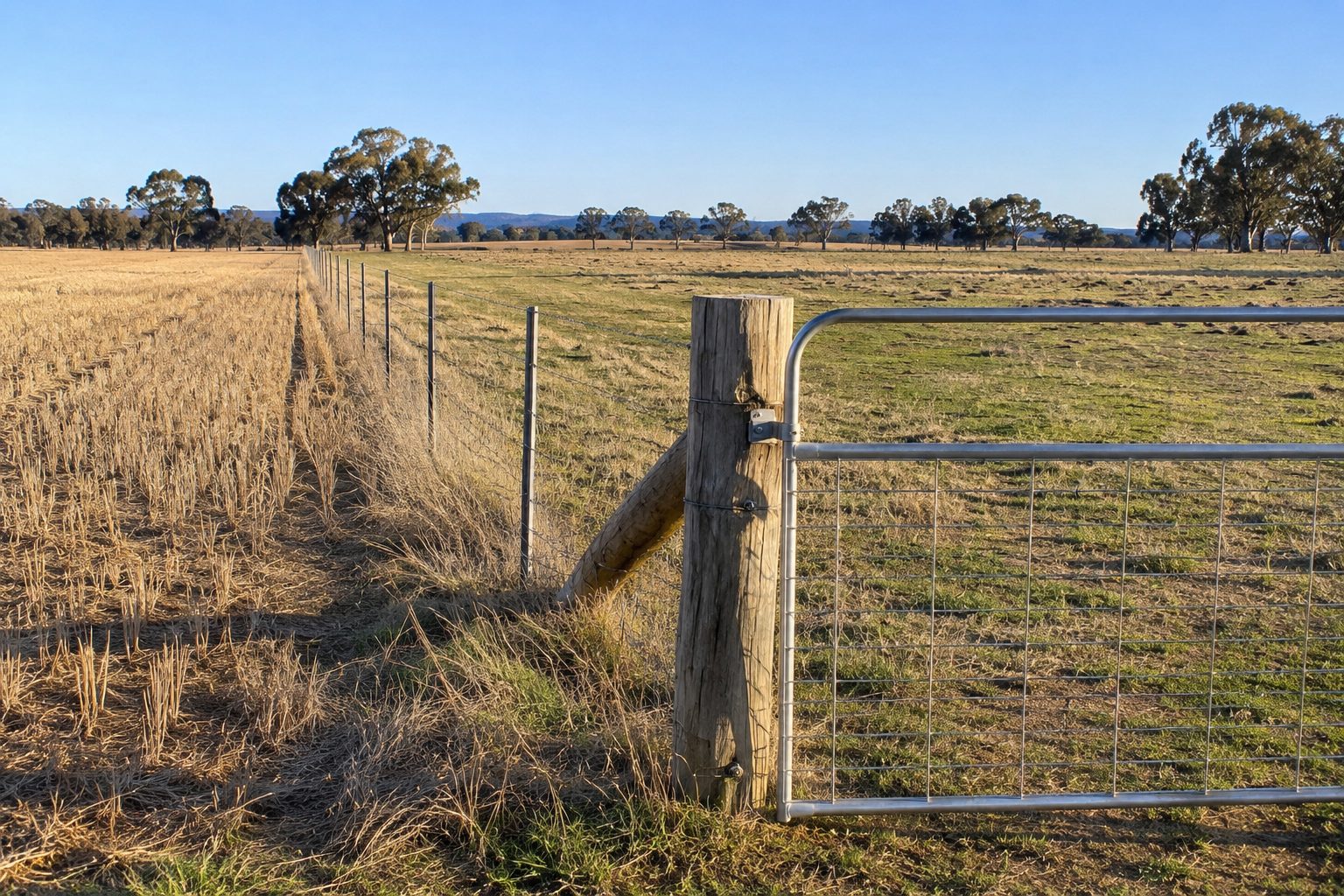
What to settle with the contractor
A written quote is the sensible basis for any notice, because the notice states an estimated cost. Whether a quote has to be attached is not something the pages we read settle, so ask a solicitor or the court or tribunal what to include. Ask the contractor to itemise the fence length and how it was measured, the fence type and wire, posts and strainers, gates, who supplies materials and what happens to the old fence. The cost factors guide explains what moves each line.
If you are replacing an old fence, say so. Removal and disposal of the old fence is a line of its own in a quote, and who pays for it between neighbours is a point to agree in writing.
The order of events, step by step
Most boundary jobs follow the same order. The table sets it out in plain terms, using what the Act and Legal Aid NSW say. Where a step is not covered by the sources, it says to ask.
| Step | What happens | Who to ask |
|---|---|---|
| Talk | You raise the fence with the neighbour and agree what is wanted. | The neighbour, or a Community Justice Centre if talking stalls. |
| Agree in writing | The type, the line, the cost share and the timing go on paper and both sign. | A solicitor if the agreement is more than a simple note. |
| Notice | If there is no agreement, a written notice states the boundary line, the work and the estimated cost. | A solicitor, or the court or tribunal, on what to include. |
| Wait | The Act, in the version we found, gives one month to agree after a notice is served. | Check the current Act on legislation.nsw.gov.au. |
| Apply | If there is still no agreement, either owner may apply to a court or tribunal. | A solicitor. Sources disagree on which forum. |
| Build | The contractor builds to the agreement or order and the written quote. | The contractor, on timing and access. |
Keep photos from the start. Photos of the old fence, the damage and the finished work help if a question comes up later, and Legal Aid NSW advises keeping them. If a boundary fence has been damaged by flood or fire, the sources do not settle who pays, and the repair page explains what we found.
Planning approval on a rural boundary
NSW Planning says fences can often be built without planning approval. In rural and environmental protection zones, the exempt rules limit height to 1.8 m and call for post and wire or post and rail systems. Farm fences are not named on that page, so confirm with the council that covers the land. Clearing trees along the line and licensing are separate questions. The approvals and clearing guide keeps the three apart.
A boundary beside a road, reserve or Crown land
If your boundary is with a road, a travelling stock reserve or other Crown land, the neighbour is a public body. Travelling stock reserves are Crown land for moving, resting and grazing stock (NSW Government). Who fences the boundary of a reserve is not answered by the pages we found, so ask Local Land Services and the council. The roads and stock routes page sets out what the agencies do say.
What this page cannot do
It cannot serve a notice, locate a boundary, settle a dispute or tell you what a court or tribunal will decide. It cannot tell you which licence or registration a contractor holds, or whether one applies to a rural boundary fence, because the pages we found do not say. The description of the Act is a summary of the version we found, not legal advice. For your block, ask a solicitor, the council that covers the land and the contractor, and check the current Act yourself.
Check the current rules before you rely on this
This page describes how a shared farm boundary fence is usually arranged with a neighbour and what to settle before the work starts. It describes the rules in general terms as they stood in November 2026. Standards, forms, thresholds and fines change.
The authoritative sources are Dividing Fences Act 1991 (NSW), in-force version dated 7 December 2024 (check the current version), Legal Aid NSW, fences, boundaries and retaining walls FAQs, NSW Planning, fences (exempt and complying development) and NSW Government, travelling stock reserves. Where anything here differs from those sources, they are right and we are not.
We are not fencing contractors, builders, regulators or lawyers. For what applies to your fence, ask the contractor which licence or registration they hold for your job, then ask NSW Fair Trading or Building Commission NSW if you are unsure, and ask the council that covers the land.
Accurate at the time of writing, November 2026. Always check the source before relying on it.